

ModsTune – AI Car Designer
Mara Apps Development
I tried ModsTune as a mobile art and design app for one simple reason: I wanted to see whether customizing a car or motorcycle could feel more like exploring ideas than editing a complicated image. Its focus is clear, but the experience depends heavily on how quickly the app can present its design options and process each request. That makes connectivity part of the practical experience, not a minor technical detail.
My first impression was that this is aimed at people who want to imagine a vehicle before committing to a real-world change. You can approach it as a visual playground, a source of inspiration, or a quick way to compare different styles. I would not treat it as a replacement for professional automotive design software, but I can see why the app has attracted a solid audience: it makes the idea of changing a vehicle feel approachable on a phone.
ModsTune is published by Mara Apps Development and sits in the Art & Design category. It is free to install, rated for Everyone, and has reached over 50K installs with a 4.6 average from around 3K ratings. Those figures suggest that the app is being used by more than a tiny group of enthusiasts, while the age rating makes it suitable for a broad audience. The current release is version 1.0.2, and it requires Android 7.0 or later.
How connected design sessions actually feel
Waiting for an idea to become a usable image
The most important thing to understand is that a connected session can change the rhythm of the app. When I am browsing ideas or preparing a customization, a short delay is easy to accept. I can think about the next color, body style, wheel treatment, or motorcycle detail while the app catches up. The experience becomes less comfortable when I am trying to compare several variations quickly and each step depends on a responsive connection.
This matters because vehicle customization is naturally iterative. I rarely know the perfect design on the first attempt. I may begin with a restrained appearance, then decide that the wheels need more contrast, the paint should be darker, or the overall look should be more aggressive. A connected workflow supports that back-and-forth when the response is smooth. When the connection is inconsistent, the same creative process feels interrupted rather than exploratory.
Related News

Why WhatsApp Messenger Still Makes Everyday Communication Feel Easy

Jurassic World: The Game Is the Better Dino Tycoon for Strategic Players

Threads in Real Life: Who Should Join, Lurk, or Leave

How SHEIN Turned Shopping Into an Endless Content Feed

How to Make Fortnite Feel Smarter on Mobile

Should You Switch to Microsoft Outlook on Mobile?
I found it useful to prepare a small plan before starting a session. Instead of making random changes while waiting, I decide on a direction first: understated street build, bold show-car appearance, rugged motorcycle treatment, or something close to the vehicle’s original character. This simple habit reduces wasted attempts and makes the app feel more purposeful. It is one of the better ways to get value from a tool that encourages visual experimentation.
Why a strong connection helps comparison work
The app makes the most sense when I use it to compare possibilities rather than chase one perfect result immediately. For example, I might test a dark body color with subtle accents, then compare it with a lighter finish and more visible trim. The value is in seeing how the complete impression changes. That process is more demanding of a connection than simply opening a static picture, because each new direction may require another round of processing.
For that reason, I would use ModsTune on a reliable home network when I want to explore several concepts. A stable mobile connection can also work, but I would be more careful if my data allowance is limited or the signal changes frequently. The app is free to download, yet connected visual experimentation can still have a practical cost if it encourages repeated attempts while using mobile data.
Gallery
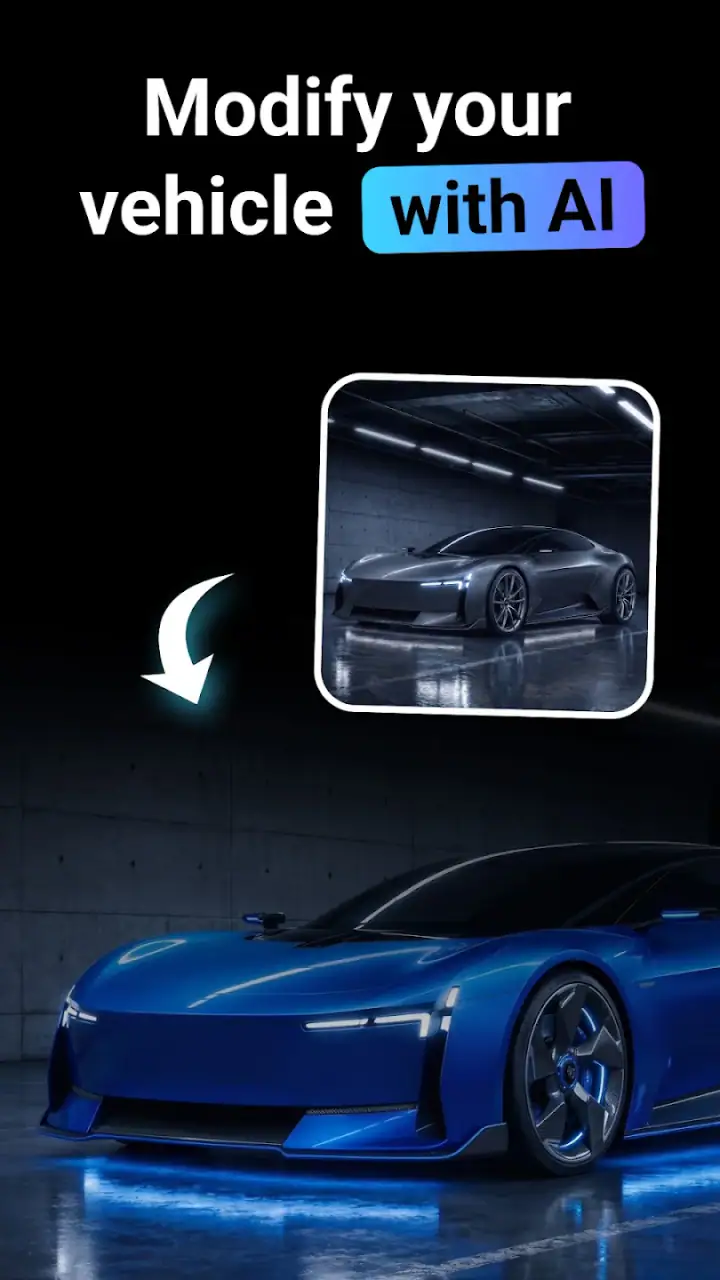
There is also a social side to this workflow. I can imagine showing a friend two or three possible looks and asking which one feels most convincing. That is more useful than presenting a single design with no comparison. If I am standing beside a real car at a meet or looking at a motorcycle in a garage, a responsive connection makes the app more useful because I can move from observation to concept without needing a desktop computer.
Using it in real mobile situations
ModsTune feels naturally suited to short mobile sessions. I can picture using it while waiting for an appointment, sitting in a passenger seat, or taking a break during a shopping trip. Those moments are ideal for testing an idea rather than completing a polished design project. The phone format lowers the commitment: I can explore a visual direction for a few minutes and stop when the concept no longer interests me.
A more realistic scenario is someone considering cosmetic changes to a personal vehicle. Before spending money on paint, wheels, accessories, or a new visual theme, that person can use the app to think through the overall balance. I would not use the result as a technical specification, but I would use it to avoid a vague decision such as “make it sportier.” Seeing a more concrete direction can reveal that the preferred look is actually cleaner, brighter, or less dramatic than expected.
It can also help when discussing an idea with a workshop or designer. A visual reference is easier to discuss than a list of adjectives. However, I would be careful to explain that the image represents an appearance concept, not a guarantee of fit, finish, material, or mechanical compatibility. The app belongs to visual planning, and that distinction is important when real money or safety is involved.
For motorcycle owners, the same approach can be useful but requires extra restraint. A visual change may look attractive while ignoring practical considerations such as visibility, riding position, legal requirements, or access to controls. I see ModsTune as a way to explore the mood of a build, not as a substitute for checking whether a modification is appropriate for the road.
When the connection fails at the wrong moment
The weakest part of a connected design workflow is not necessarily a complete outage. A slow or unstable connection can be more frustrating because the app may appear to be working while the result takes longer than expected. In that situation, I avoid repeatedly tapping the same control. Repeating an action can make it harder to tell whether the original request is still processing or whether a second request has been started.
My preferred recovery routine is simple. I wait briefly, check whether the current screen has changed, and then return to the last clear step if the result does not appear. I also avoid making a long series of changes before confirming that the previous one succeeded. That may sound cautious, but it protects the direction I am working toward and prevents confusion when the network becomes unreliable.
If I am using mobile data, moving to a location with a steadier signal is usually more sensible than continuing to push through delays. For an important comparison, I would close unrelated apps, make sure the phone has enough battery, and restart the session only after noting the design idea I was pursuing. The point is not to turn a casual art app into a technical procedure; it is to avoid losing creative momentum.
This is also where expectations matter. ModsTune is better suited to flexible experimentation than to a time-sensitive presentation. If I need a design immediately for a customer conversation or a purchase decision, I would prepare the concepts in advance rather than depend on a live session at the last minute. A desktop editor or a saved collection of reference images may be the safer choice when immediate access is essential.
Being careful with mobile data and repeated attempts
Because the app’s appeal comes from trying different visual directions, it can encourage more activity than expected. One idea becomes three, then five, especially when the first result is almost right. I would begin on Wi-Fi if I planned a long session, particularly when comparing several versions. This is not about avoiding experimentation; it is about choosing the right connection for the amount of experimentation I intend to do.
I also recommend deciding what each attempt is meant to answer. One request might test the body color, another the level of visual aggression, and a third the relationship between the main finish and accent details. That approach is more data-conscious than changing everything at once, because it reduces the number of repeated attempts and makes each result easier to judge.
Privacy-conscious users should apply the same common sense they use with any visual app. I would avoid treating personal photographs, identifiable locations, or sensitive surroundings as necessary parts of a vehicle concept unless I had a clear reason to include them. A clean, neutral reference is often enough for design exploration and keeps the session focused on the vehicle rather than unrelated personal details.
The in-app purchase range is from $9.99 to $29.99 per item, so I would also pay attention to the purchase screen before confirming anything. The free entry point makes it easy to try the basic experience, but anyone who expects unlimited exploration should first understand which parts of the workflow may require payment. I prefer deciding on a small, specific purpose before buying rather than paying simply because I have already invested time in a design.
What the app does better than familiar alternatives
The usual alternatives in this category fall into two groups. One is a conventional image editor, which offers detailed control but expects the user to understand layers, selections, masking, perspective, and color adjustment. The other is a general-purpose inspiration platform, which provides many ideas but does not necessarily let me shape a concept around the vehicle I have in mind.
ModsTune sits between those options. Its strength is accessibility: I can approach a car or motorcycle as a complete visual subject instead of manually constructing every change. That makes it more inviting for someone who has a clear taste but limited editing experience. I can explore a direction without first learning a full professional workflow.
The trade-off is control. A traditional editor is usually better when I need exact placement, precise proportions, careful retouching, or a technically faithful mock-up. A general inspiration service is better when I am still discovering styles and want a broad range of references. ModsTune is most useful in the middle: I know the vehicle type and general mood, but I want help turning that idea into something visible.
That distinction affects who should skip it. If you are a professional designer preparing production-ready visuals, you will probably want more exact tools and a more controlled editing environment. If you only want to browse automotive photos without changing a concept, a simpler inspiration app may be quicker. I would recommend ModsTune to the person who wants to imagine a customized vehicle, compare directions, and communicate a visual preference without becoming an image-editing specialist.
Small habits that make the results more useful
I get better value when I keep the design brief narrow. Rather than asking for an entire personality change at once, I start with one central idea and let the rest support it. A clean body color, a specific level of contrast, or a particular motorcycle character gives me something to judge. If every element is dramatic, it becomes difficult to understand which choice is actually working.
I also compare designs at a distance. A close look can make small details seem more important than they will be in everyday use. I ask myself whether the main shape, color balance, and overall attitude still make sense when viewed quickly. This is especially helpful for vehicles, because most people will see them from several steps away, in changing light, and while they are moving through an ordinary environment.
Another useful habit is separating inspiration from commitment. I might like a bold concept on screen but prefer a quieter version for daily driving. The app is good at revealing what catches my attention, but it cannot decide whether that choice will remain enjoyable after months of ownership. I use the visual result to start a conversation with myself, not to end one.
Finally, I save or note the direction I like before trying a radically different one. Connected creative tools can make it easy to move forward and forget the previous version. Keeping a simple record of the preferred color, mood, and standout detail gives me a reference if a later experiment goes too far. It also makes the app more useful when I want to explain the idea to someone else.
Where the current experience needs patience
The app’s main friction is the combination of creative curiosity and network dependence. When everything responds smoothly, that relationship is easy to overlook. When the connection slows down, the app feels less like a quick sketchbook and more like a service I have to wait for. Users who expect instant edits from a traditional gallery or editor should adjust their expectations.
The free price is helpful for trying the concept, but the presence of purchases means I would not assume that every possible creative direction is included at no cost. The purchase range is substantial enough that I would inspect each option carefully and consider whether the result solves a real need. For casual use, the free starting point may be enough. For frequent experimentation, the value depends on how often the paid items fit into your actual workflow.
I also would not judge a vehicle solely by the visual result. A convincing concept can still be unrealistic in terms of fit, cost, regulations, maintenance, or everyday practicality. That is not a flaw unique to this app; it is a limitation of visual customization in general. The important thing is to use the image as a decision aid rather than as proof that a physical modification will work exactly as shown.
My connectivity verdict
After using ModsTune with that context in mind, I see it as a focused and approachable way to explore car and motorcycle styling on a phone. Its best moments come when I have a clear idea, a dependable connection, and enough time to compare a few directions instead of demanding one perfect result immediately.
I would recommend it to enthusiasts planning a visual refresh, beginners who find traditional editing software intimidating, and anyone who wants a quick concept to discuss with friends or a professional. I would be more cautious about recommending it to people who need precise technical mock-ups, guaranteed instant access, or a workflow that never relies on a live connection.
The app is free to start, suitable for Everyone, and developed by Mara Apps Development, which makes it easy to approach without a large initial commitment. At the same time, the paid items and the need for a stable session mean that thoughtful use matters. My advice is to begin on a reliable network, define one design question at a time, and treat every result as inspiration rather than a final engineering plan.
Overall, ModsTune works best as a connected visual sketchbook for vehicle ideas. It does not replace a professional editor or real-world automotive advice, but it gives ordinary users a more direct way to explore personal style. If that is what you want, I think it is worth trying; just use it deliberately, especially when your connection, mobile data, or budget is limited.
FAQs for ModsTune – AI Car Designer
What is ModsTune – AI Car Designer?
ModsTune – AI Car Designer is an AI-powered customization app for creating virtual car concepts. It allows you to experiment with different vehicle styles, body kits, paint colors, wheels, lighting, and other visual modifications. The app is mainly intended for inspiration and entertainment, helping users preview creative tuning ideas without physically modifying a real vehicle or spending money on aftermarket parts.
How does the AI car design feature work?
The app generally works by using an uploaded or selected car image and applying design instructions, visual presets, or customization options through artificial intelligence. Results can vary depending on the original photo, lighting, camera angle, and how clearly the requested style is described. AI-generated designs may look impressive, but they should be treated as artistic concepts rather than exact previews of how a real modification will appear.
Is ModsTune – AI Car Designer free to use?
Availability of features may depend on the app’s current version, platform, and subscription model. Some tools or basic designs may be accessible without payment, while advanced generations, higher-resolution exports, additional styles, or unlimited usage can require in-app purchases or a subscription. Before downloading, review the store listing and payment screen carefully, especially the renewal terms and any free-trial conditions.
Can I use the designs to modify my real car?
You can use the generated images as visual inspiration when planning a real customization project, but they should not be considered technical instructions or guaranteed representations of compatible parts. AI designs may create unrealistic proportions, impossible installations, or accessories that are not commercially available. Always consult a qualified mechanic, body shop, or manufacturer documentation before purchasing parts or making changes to a vehicle.
What should I know about privacy when uploading car photos?
If the app allows you to upload photographs, check its privacy policy before submitting images. Photos can contain more information than expected, including license plates, locations, people, or other identifiable details. Avoid uploading sensitive images, remove visible personal information when possible, and confirm how files are stored, processed, shared, and deleted. Also review the permissions requested by the application during installation.
Pros
- Quickly generates creative car designs from simple prompts.
- Offers many visual styles for exploring custom vehicle concepts.
- Useful for inspiration before tuning or modifying a real car.
- Easy interface makes experimentation accessible to beginners.
- Convenient way to save and compare different design ideas.
Cons
- AI results may include unrealistic parts or mechanical details.
- Some generated designs can look inconsistent or low in quality.
- Advanced customization may be limited compared with professional tools.
- Results may depend heavily on prompt wording and image quality.
- Certain features or exports may require payment or contain ads.


